
The new area of Jackson's Coppice and Marsh aerial by Ben Wiles
Jackson's Coppice & Marsh
Location
Sugnall
Cop Mere
Staffordshire
ST21 6HA (nearest)
*West of Eccleshall,
View on What3Words

Know before you go
Dogs
When to visit
Opening times
Open at all timesBest time to visit
April to May, July to SeptemberAbout the reserve
Highlights
- Visit the woodland in spring to see a magnificent show of bluebells and other spring flowers.
- You’ll be welcomed with a wonderful display of colour if you visit in autumn. Walk through the atmospheric flooded alder woodland at the end of the marsh - Staffordshire's answer to the Everglades!
- Take in the views from the roadside, over Walk Mill Pool – recently restored to its former glory through a partnership between the Trust and Sugnall Estate.
A link to local history
The origin of the marsh is closely linked with the two mills - Walk Mill downstream and Offleybrook Mill upstream. A dam at Walk Mill raised water levels on the marsh as early as 1250. Despite these raised water levels the fields were managed as water meadows and cut for hay until the 1950’s. When Walk Mill fell into disuse in the 1970’s the river and mill pool soon became silted up. The Trust has been involved with the management of Jackson’s since the mid 1970’s and recently joined forces with the landowner and Sugnall Estate to restore Walk Mill Pool.
Bluebells, badgers & birdsong
Jackson’s Coppice is best known for its dense carpet of bluebells in spring and the presence of a huge badger sett - one of the largest in the county. The underlying sandy soils provide easy digging for the badgers and the bluebell bulbs provide a ready food source on their doorstep!
The abundance of bluebells indicate the long establishment of woodland at Jackson’s Coppice, although many of the species which are present were probably planted at the end of the 19th century. The original oaks, rowans and hazel were supplemented by more unusual species such as sweet chestnut, beech and hornbeam. Test your tree identification and see if you can spot the bird cherry trees on the roadside verge. This tree is uncommon in Staffordshire and at its southern-most range in Britain.
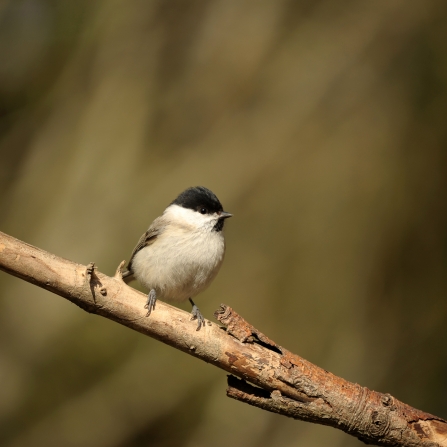
The coppice has a particularly good range of woodland birds. Look out for nuthatch, treecreeper, greater spotted woodpecker, long tailed tit and marsh tit. In summer, pied flycatchers join the influx of warblers to breed in the woods.
Under the boardwalk
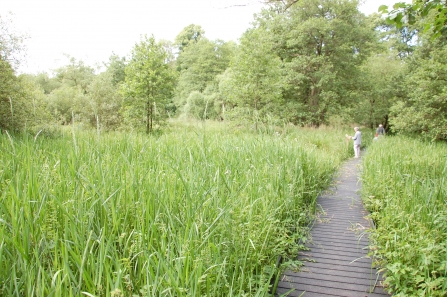
The entrance to the boardwalk takes you into Staffordshire's answer to the Everglades – a magnificent wet woodland of alder (known as Carr) with its own distinct flora and fauna. The River Sow enters the reserve further upstream and splits into a delta of narrow channels, making access very difficult, but providing fantastic wetland habitat. Pause for a while on the bridge over the stream and on a sunny summer’s day you’ll be rewarded with the sight of numerous dragonflies and damselflies.
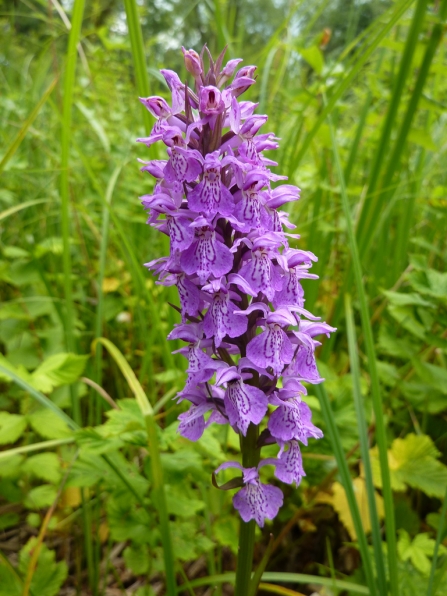
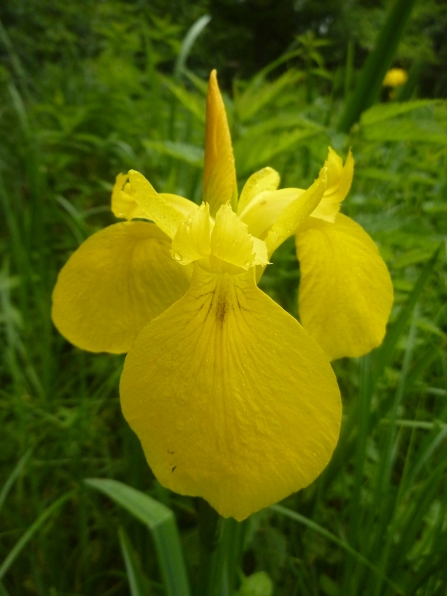
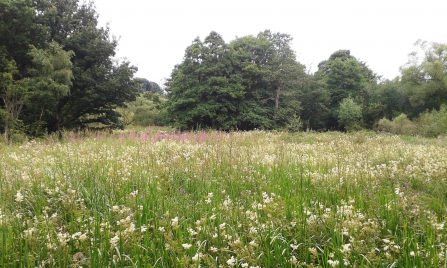
Look out for the change in plants as you leave the alder woodland at the furthest point on the boardwalk. The distinctive greater tussock sedge takes over in many areas, with wetland plants such as meadowsweet, valerian, ragged robin and yellow flag iris growing between the tussocks. Other unusual plants, southern marsh orchids and bogbean, are not easily seen from the boardwalk.
Some trees good, some trees not so good – keeping a balance
As its name suggests some of the woodland areas would have been coppiced in the past - cutting back trees to harvest a range of timber products and then letting the coppiced stumps regrow for future harvesting. You can still see the evidence from coppice management where more than one tree trunk grows from the base of the same tree.
Coppicing and woodland thinning are important management techniques in maintaining woodland biodiversity.
The more diverse the woodland, both in terms of species present and height, the wider range of plants and animals can be supported. Dead wood, both standing and fallen, is also beneficial to a wide range of insects and fungi.
Double the space for nature
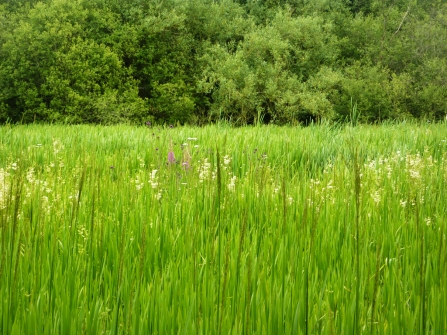
In 2026 we doubled the size of Jackson's Coppice and Marsh Nature Reserve to 40 acres (16 hectares) by purchasing the field by the car park (which we’ve leased since the 1970s) and further pasture to the south which borders the River Sow.
This land is very wet as it is part of the river's floodplain. We plan to coppice some of the large alders here to allow more daylight into the marsh, as well as controlling some of the willows on the marsh itself. This area of the reserve can store lots of water during times of heavy rainfall. It's an area which would really benefit from the expert engineering efforts of beavers - as part of our wild beaver project, we'll be exploring this possibility with local landowners.
Over time we'll bring more flowers and scrubby patches to these new fields, which cattle will lightly graze. The flowers will offer a vital food source for various butterflies and pollinators. The improved habitat will also be great for yellowhammers, a Red-listed farmland bird which is priority species in Staffordshire’s Local Nature Recovery Strategy, as well as linnets, fieldfares, redwings, and song thrushes.
Contact us